Prescription care, without the waiting room.
Get started
Compounded TirzepatideRx
Weekly GLP-1 + GIP injection.

Compounded SemaglutideRx
Weekly GLP-1 injection.

TadalafilRx
Generic Cialis®. Lasts up to 36 hours.

SildenafilRx
Generic Viagra®. Works in 30 minutes.

FinasterideRx
Generic Propecia®. Blocks DHT daily.

Hair Regrowth SprayRx
3-in-1 topical: finasteride + minoxidil + tretinoin.
Menopause Joint Pain: The Estrogen Link Explained

Written by Jack & Jane Editorial Team
Published October 29, 2026

Key Takeaways
# Menopause Joint Pain: The Estrogen Link Explained
If you have noticed that your knees, hips, or fingers ache in ways they did not a few years ago — and you are in your 40s or 50s — you are asking exactly the right question. Menopause joint pain is one of the most underreported symptoms of the menopause transition, and emerging research points to a clear biological explanation: falling estrogen levels alter the way your joints are maintained, lubricated, and protected from inflammation.
This article explains what the science currently shows, what you can realistically expect, and how to have a productive conversation with a licensed provider about your options.
Why Estrogen Matters for Your Joints
Most people associate estrogen with reproductive health, but this hormone has receptors throughout the body — including in cartilage, synovial tissue (the membrane lining your joints), tendons, and bone. When estrogen levels decline during perimenopause (the transition phase preceding menopause, typically beginning in the mid-to-late 40s) and menopause (defined as 12 consecutive months without a menstrual period), those tissues lose a key regulatory signal.
Estrogen plays at least three documented roles in joint health:
- Anti-inflammatory signaling. Estrogen suppresses pro-inflammatory cytokines — small proteins that drive joint inflammation. As estrogen falls, cytokine activity can increase, contributing to swelling, warmth, and stiffness that many women describe as feeling like early arthritis.
- Cartilage maintenance. Cartilage cells (chondrocytes) express estrogen receptors. Research published in Osteoarthritis and Cartilage has shown that estrogen promotes cartilage synthesis and inhibits cartilage-degrading enzymes (matrix metalloproteinases), suggesting a direct protective role.
- Synovial fluid regulation. The synovial membrane, which produces the lubricating fluid inside joints, is also estrogen-sensitive. Reduced estrogen may compromise fluid quality and volume, increasing friction and the sensation of stiffness — especially pronounced in the morning or after sitting for extended periods.
What "Perimenopause Aches" Actually Feel Like
The joint symptoms associated with the menopause transition are distinct from classic osteoarthritis, though the two can coexist. Women commonly describe:
- Diffuse, migratory aching — discomfort that moves from one joint to another rather than settling permanently in one spot.
- Morning stiffness lasting less than 30 minutes (longer stiffness is more characteristic of inflammatory arthritis and warrants a rheumatology referral).
- Increased sensitivity in small joints of the hands and fingers — a pattern that has been linked specifically to the perimenopausal period in observational studies.
- Generalized menopause stiffness that is worse after inactivity and eases with gentle movement.
A 2021 analysis published in Menopause: The Journal of The Menopause Society found that musculoskeletal symptoms, including joint pain and stiffness, affected more than 70 percent of women during the menopause transition — making these complaints more prevalent than hot flashes in some cohorts. Individual results vary, and not every woman will experience joint symptoms at the same severity or timing.
It is worth noting that the menopause transition also accelerates bone density loss, which is a separate but related concern. Joint aches and bone loss can reinforce each other; a licensed provider can help you distinguish between them and assess whether bone density testing is appropriate for your situation.

The Research on Estrogen Therapy and Joint Pain
The relationship between estrogen joint pain and hormone therapy has been studied for decades, with the most substantial data coming from the Women's Health Initiative (WHI), a large, long-term study coordinated by the National Institutes of Health.
Re-analyses of WHI data, including work published in Annals of Internal Medicine, found that women using hormone therapy reported significantly lower rates of joint pain and stiffness compared with women receiving placebo. The benefit appeared in both estrogen-alone and estrogen-plus-progestogen arms of the trial, though the specific joint outcomes were secondary endpoints rather than primary ones — meaning they should be interpreted with appropriate caution.
More recent observational data and mechanistic studies continue to support the plausibility of this connection. The North American Menopause Society (NAMS) acknowledges musculoskeletal symptoms as a recognized feature of the menopause transition and notes that hormone therapy may offer relief for some women as part of a broader symptom-management strategy.
What remains less clear is the optimal formulation, dose, route of delivery, and duration of therapy specifically for joint outcomes. These are individual decisions that depend on your overall health history, risk profile, and personal priorities — and they require a thorough conversation with a licensed provider.
Other Factors That Influence Joint Health During Menopause
Estrogen is not the only variable. Several other factors interact with the hormonal shift to shape how your joints feel during this period of life:
- Body weight. Each additional pound of body weight places roughly four pounds of pressure on the knee joint, according to data cited by the Arthritis Foundation. Weight changes that often accompany menopause can amplify joint stress.
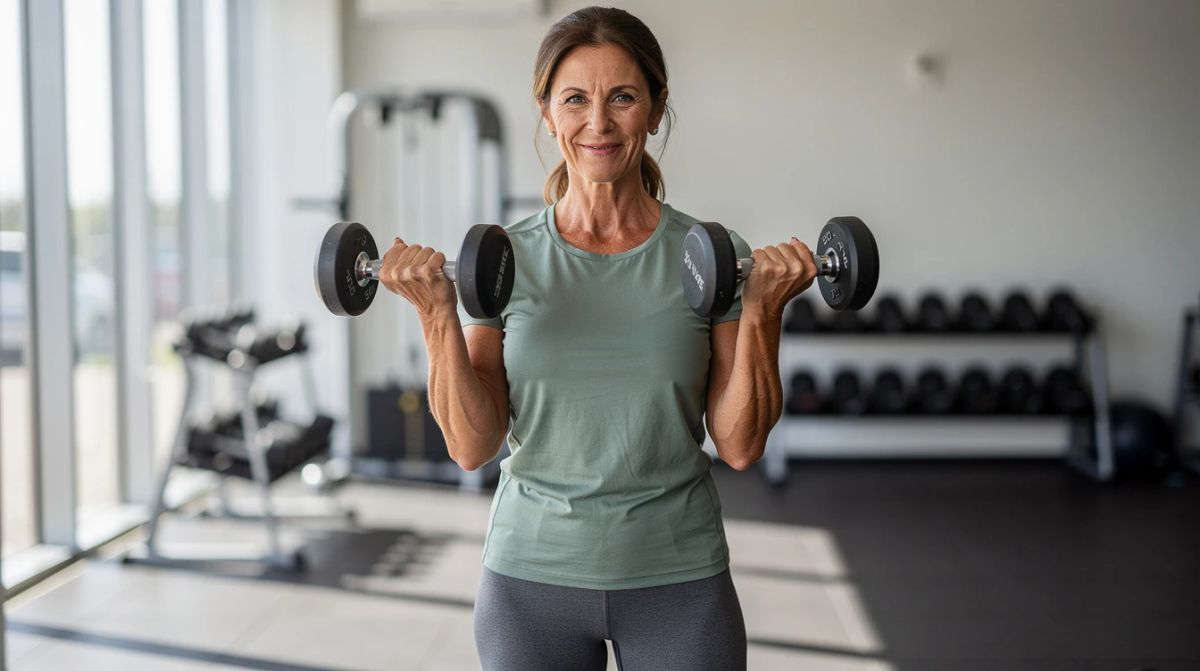
- Physical activity. Resistance training and low-impact aerobic activity help preserve muscle mass that supports and offloads joints. Inactivity during a painful flare can create a cycle that worsens stiffness over time.
- Sleep disruption. Night sweats and insomnia — common menopause symptoms — are independently associated with heightened pain sensitivity (a process called central sensitization), which can make joint aches feel more intense even when tissue-level inflammation is modest.
- Diet and inflammation. Diets high in ultra-processed foods and refined carbohydrates are associated with elevated inflammatory markers, while Mediterranean-pattern diets have been associated with lower inflammatory burden in multiple peer-reviewed cohort studies.
Addressing these factors alongside any hormonal evaluation gives you the broadest foundation for managing joint health through the transition.
Where Jack & Jane Fits
Jack & Jane is a technology platform that connects you with independent, licensed providers and an independent, state-licensed pharmacy. If joint pain, stiffness, or other perimenopausal symptoms are affecting your quality of life, the platform makes it straightforward to complete a thorough medical intake and speak with a licensed provider who can evaluate your full symptom picture and discuss whether hormone therapy is appropriate for you.
One option a provider may discuss is the estradiol patch — a transdermal (through-the-skin) form of estradiol, the primary form of estrogen produced by the ovaries before menopause. Transdermal delivery bypasses first-pass liver metabolism, which some clinical guidelines note may have a more favorable safety profile for certain women compared with oral formulations. Whether this option is right for you depends on your individual health history, and only a licensed provider can make that determination after a complete medical intake.

Compounded hormone preparations — when prescribed — are prepared by state-licensed pharmacies in accordance with FDA regulations. They are not FDA-approved products. Brand-name hormone therapies that are FDA-approved are also available through the platform when a provider determines they are appropriate.
What to Do Next
1. Document your symptoms before your appointment. Keep a one-week log noting which joints ache, time of day, duration of morning stiffness, and any pattern with your menstrual cycle (if still present). This gives your provider concrete information to work with.
2. List all current medications and supplements. Some supplements marketed for joint health interact with medications used in hormone therapy. Full disclosure ensures your provider can make the safest recommendations.
3. Complete a medical intake with a licensed provider. Through Jack & Jane, you can complete an intake that covers your hormonal symptoms, joint concerns, personal and family medical history, and any contraindications. A provider will review your information and discuss options — which may or may not include hormone therapy.
4. Ask specific questions about risks and benefits. The benefit-risk calculation for hormone therapy is highly individual. Come prepared to ask: "What is the evidence that this approach will help my joint symptoms?" and "What monitoring do I need?" A good provider will welcome these questions.
Sources
- Estrogen Receptors in Cartilage and Joint Health — *Osteoarthritis and Cartilage* — https://www.oarsijournal.com/
- Musculoskeletal Symptoms in the Menopause Transition — *Menopause: The Journal of The Menopause Society* — https://www.menopause.org/
- Women's Health Initiative: Joint Pain and Hormone Therapy — National Institutes of Health — https://www.nhlbi.nih.gov/science/womens-health-initiative-whi
- North American Menopause Society: Hormone Therapy Position Statement — https://www.menopause.org/docs/default-source/professional/nams-2022-hormone-therapy-position-statement.pdf
- Arthritis Foundation: Weight and Joint Pain — https://www.arthritis.org/health-wellness/healthy-living/nutrition/weight-loss/weight-loss-benefits-for-arthritis
- NIH National Institute on Aging: Menopause — https://www.nia.nih.gov/health/menopause
This article is for educational purposes only and is not medical advice. A licensed provider determines what is appropriate for you after a complete medical intake.
References
- [Musculoskeletal Symptoms in the Menopause Transition — *Menopause: The Journal of The Menopause Society* — https://www.menopause.org/](https://www.menopause.org/)
- [Women's Health Initiative: Joint Pain and Hormone Therapy — National Institutes of Health — https://www.nhlbi.nih.gov/science/womens-health-initiative-whi](https://www.nhlbi.nih.gov/science/womens-health-initiative-whi)
- [North American Menopause Society: Hormone Therapy Position Statement — https://www.menopause.org/docs/default-source/professional/nams-2022-hormone-therapy-position-statement.pdf](https://www.menopause.org/docs/default-source/professional/nams-2022-hormone-therapy-position-statement.pdf)
- [Arthritis Foundation: Weight and Joint Pain — https://www.arthritis.org/health-wellness/healthy-living/nutrition/weight-loss/weight-loss-benefits-for-arthritis](https://www.arthritis.org/health-wellness/healthy-living/nutrition/weight-loss/weight-loss-benefits-for-arthritis)
- [NIH National Institute on Aging: Menopause — https://www.nia.nih.gov/health/menopause](https://www.nia.nih.gov/health/menopause)
- This article is for educational purposes only and is not medical advice. A licensed provider determines what is appropriate for you after a complete medical intake.*
Share this article

Ready to start your journey?
Complete your free online visit and see if GLP-1 treatment is right for you.
Get Started